Limbo
- Work In Progress -
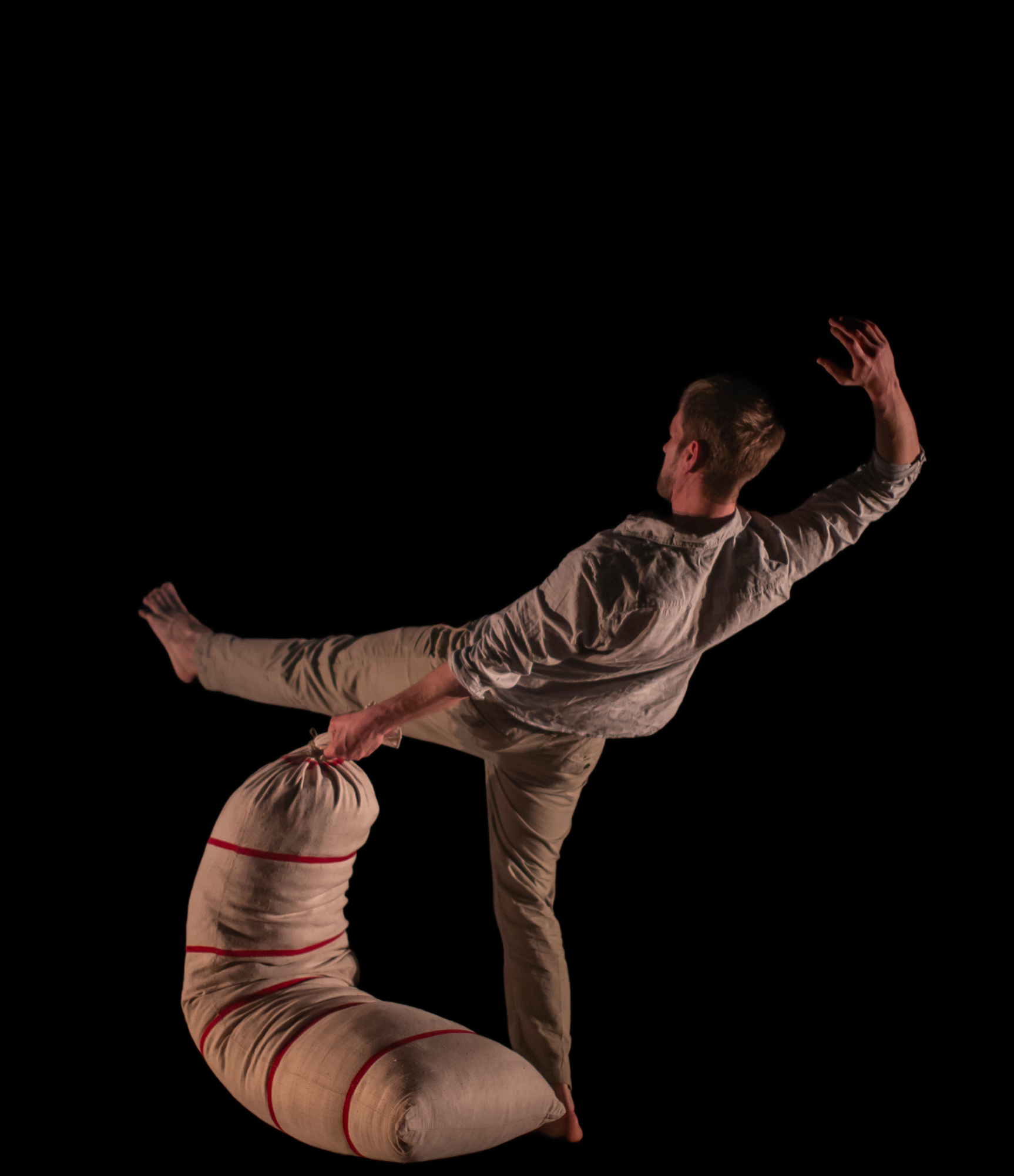
Limbó is a snapshot of climbing within the body and soul. Base camp before the summit attempt. The body is still functioning at sea level, but the mind is already near the summit. Acclimatization and transformation, searching for balance.
- Hey, this is pretty good, how did you do it? - Well, I was bored in grammar class, so I worked on this. - Yeah, those school chairs could handle it. Is it some kind of special chair? - Hell no, it's the cheapest one from Ikea, I just screwed it together a little here and there to make it stronger, because it wasn't designed to be loaded like that for hours at a time. - For hours at a time? Are you stupid? But why? - Why not? Because I'm curious. Because I can. Because there's something in it. Because it's neither this nor that. I'm sitting, but I'm not really sitting, I'm standing, but I'm not really standing. Between the two. In the limbo. - What? - I don't know. It's a transition. From one point of equilibrium to another. I just got stuck in it. I'm stuck in it, fuck, and I don't know if I should go forward or backward? - So you're kind of a chair artist.
Limbo is not a final state or a goal, but a process. Not arrival, but swaying. Not immobility, but subtle, continuous oscillation — balance is not stability, but constant recreation. Limbo is a space where uncertainty is not a lack, but an active creative force.
The performance is based on a long-term exercise in self-awareness. The creator begins each morning with free writing: after waking up, his first task is to write down his thoughts—without editing, control, or self-censorship. These texts become the organic, constantly changing "text body" of the performances. As a result, the performance sounds different every time: layers of real-time healing, self-reflection, and identity search interweave the performance.
In contrast, the movement and musical structure of the performance is constant. One of the fundamental questions of the concept is: How does the stable, abstract movement system enter into dialogue with the constantly changing, emotionally charged cluster of thoughts? What happens when the body works in a closed composition, while the text—and the inner world—is in a different place each time?
The performance is therefore constantly searching for itself, just like the creator. The viewer is a witness to this living, evolving journey of self-discovery—and a participant through their own reflections.
The physical structure and movement language of the performance are built from the different phases of rehabilitation following an injury. The balance and coordination exercises used during healing do not appear merely as technical raw material, but become part of the choreographic structure of the performance in an abstract, stylised form.
- Creator, Performer: Márton Csuzi
- Music: Márton Csuzi, Zazie Farkas
- Dramaturg: Róbert Vörös, Ármin Szabó Székely
- Lighting, Space: Márton Csuzi, Eszter Földes
- Text: Márton Csuzi, Péter Závada
- Outside eye: Zsófia Zoletnik, Lennart Paar
Supported by